

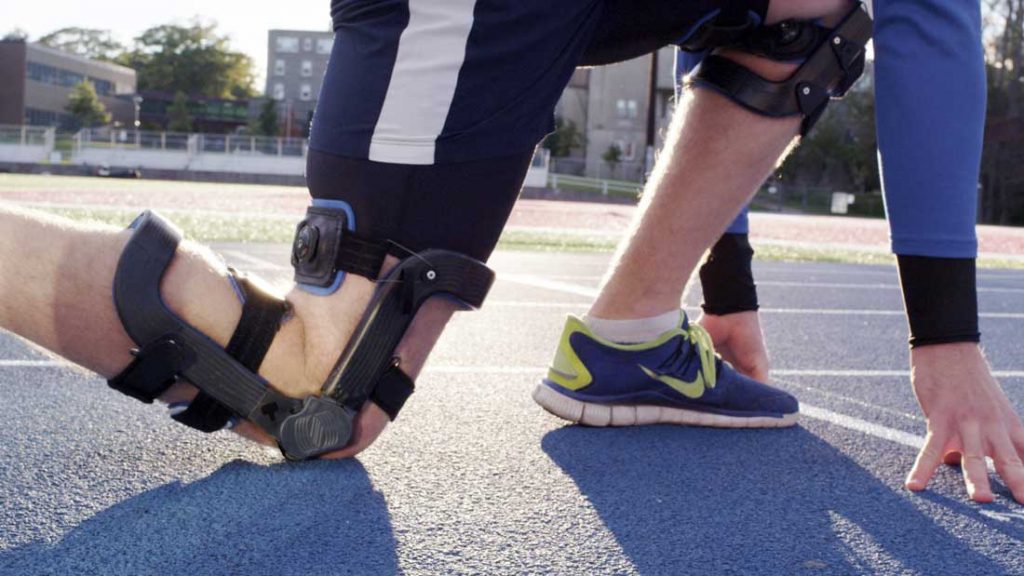
Comfort is about how supported and secure your knee feels during movement. Selection of a hinged knee brace and regular knee brace totally depends on the condition you are dealing with.
Ask yourself these 4 questions:
- Is my injury mild or severe?
- Does my knee feel unstable?
- Am I recovering from surgery?
- Do I need support for sports or daily use?
What is a Regular Knee Brace?
A regular knee brace is a simpler support. It is usually made of elastic, neoprene, or fabric material. It does not have hinges and is designed mainly for compression and mild support.
Types of Regular Knee Braces
- Knee sleeves.
- Wrap-around braces.
- Basic compression supports.
Key Features of Regular Knee Braces
- Lightweight and flexible.
- Easy to wear.
- Provides warmth and compression.
- Suitable for mild pain or strain.
Regular knee braces are useful when you are dealing with all these:
- Mild knee pain.
- Swelling.
- Muscle fatigue.
- Early-stage discomfort.
- General support during activities.
Hinged Knee Brace vs Regular Knee Brace
The difference between these two types of braces are as follows.
1. Level of Support
Hinged Knee Brace
- Provides strong support.
- Best for ligament injuries and instability.
Regular Knee Brace
- Provides light to moderate support.
- Suitable for minor issues.
- Structure
Hinged Knee Brace
- Has metal or plastic hinges on both sides.
- Rigid support for healing.
Regular Knee Brace
- No hinges.
- Made of soft, stretchable material.
- Movement Control
Hinged Knee Brace
- Controls movement.
- Prevents harmful twisting or sideways motion.
Regular Knee Brace
- Does not control movement.
- Only supports and compresses.
- Usage
Hinged Knee Brace
- Go-to choice for ligament tears and post-surgery recovery.
- Ideal to use if you have mild to severe pain.
Regular Knee Brace
- Used for mild pain and swelling.
- Easily wearable during routine-based activities.
- Comfort and Flexibility
Hinged Knee Brace
- Slightly bulky as well as less flexible.
- Snug fit for better stability.
Regular Knee Brace
- Lightweight and comfortable.
- Easy to wear all day.
- Cost
Hinged Knee Brace
- More expensive due to advanced design.
- Available at medical stores.
Regular Knee Brace
- Affordable.
- Easily available.
When Should You Use a Hinged Knee Brace?
If you:
- Have a ligament injury such as ACL or MCL.
- Feel unstable or wobbly while walking.
- Recovering from knee surgery.
- Play sports as well as need extra protection.
When is a Regular Knee Brace Enough?
It is ideal for everyday use as well as mild discomfort.
Make sure to regular knee brace is suitable if:
- You have mild knee pain.
- There is slight swelling.
- You need basic support during walking or exercise.
- You want preventive support while working out.
Benefits of Hinged Knee Brace
Let’s look at the benefits in simple terms:
- Strong Stability
Keeps your knee steady and prevents unwanted movement. - Better Healing
Protects injured ligaments and allows them to heal properly. - Injury Prevention
Reduces the chances of further damage. - Useful for Sports
Supports high-impact activities like running, football, or basketball. - Post-Surgery Care
Essential for recovery after ligament repair.
Limitations of Hinged Knee Brace
While helpful, it also has some downsides:
- Can feel bulky.
- Slightly uncomfortable for long wear.
- More expensive.
- Needs proper fitting.
Benefits of Regular Knee Brace
- Comfortable to Wear
Soft and flexible material. - Easy to Use
Slip-on design makes it simple. - Improves Circulation
Compression helps reduce swelling. - Affordable
Budget-friendly option.
Limitations of Regular Knee Brace
- Does not provide strong support.
- Not suitable for serious injuries.
- Cannot prevent instability.
Tips for Using a Knee Brace Properly
- Get the Right Size
A loose brace won’t support properly. A tight one can restrict blood flow. - Wear it as Advised
Follow your doctor’s instructions. - Do Not Overdepend
Use it as support, not a permanent solution. - Combine with Exercise
Strengthening muscles is equally very crucial. - Keep it Clean
Wash it quite frequently in order to maintain hygiene.
Common Mistakes to Avoid
- Wearing a hinged brace without taking any medical advice from healthcare provider.
- Ignoring pain and continuing activity.
- Not adjusting the knee brace properly.
- Skipping rehabilitation exercises.
Recovery and Rehabilitation
Braces support healing but movement as well as muscle strength restore function. A knee brace alone is not enough for full recovery. You should also focus on:
- Physiotherapy exercises.
- Strength training.
- Proper rest.
- Healthy diet.
Final Thoughts
Hinged knee braces such as supports with hinges or compression supports provide warmth and targeted compression. They are suitable for severe injuries as well as discomfort. On the other hand, a regular knee brace for men and women is best suited for those who are dealing with mild pain as well as need everyday support. But for general comfort or minor issues, a knee pain relief regular brace is enough.
Both regular and hinged knee braces offer all these:
- Stronger lateral which means side-to-side support.
- Better protection for ligaments.
- Controlled range of motion.
- Enhanced stability during movement.
You can stay safe and supported during activity. Whether you choose regular or hinged braces, it helps support the knee to recover faster.